A CPA-firm site that makes a high-trust service feel modern — and proves its value with real tax math.
What a great law firm website needs in 2026
The short answer
A great law firm website meets a stressed, skeptical visitor with orientation, not bravado. It helps them work out what kind of problem they have, shows the firm is genuinely regulated and transparent about pricing, and makes the first conversation feel safe to request.
By Nikolai Bhend · Updated September 2, 2026 · Audited to WCAG 2.2 AA
What the best law firm websites do in 2026 — the practices this template is built to prove.
The demo is the evidence
Sterling & Associates — a fictional law firm in London, UK — is this template running live at law.horizonstemplates.com. Primary action: “Free consultation”. Load it right here, flip it to mobile, or open it full-size.
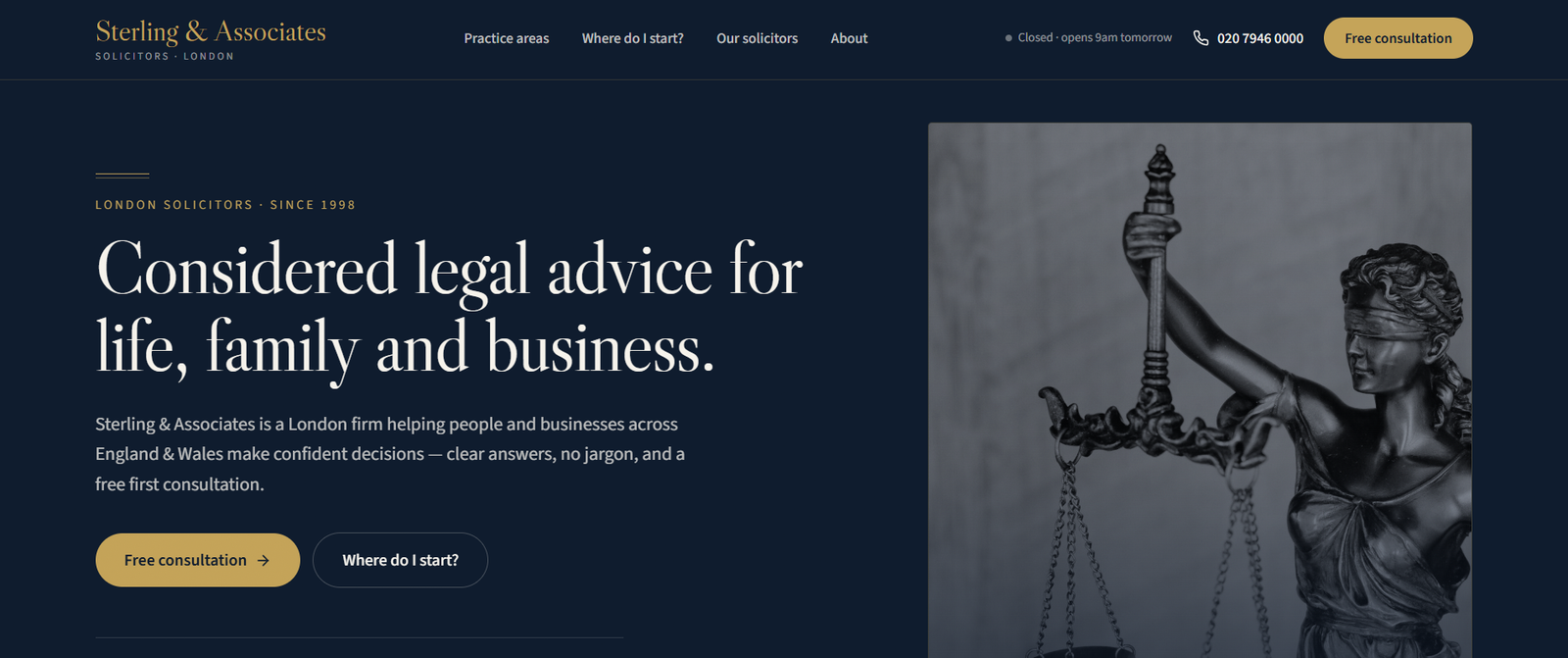
Free to make yours: on the demo, choose Use template in the Hostinger bar at the bottom of the page — it starts you from this exact build in Hostinger Horizons. Publishing the finished site needs a Horizons plan; this directory charges nothing.
What does a great law firm website need in 2026?
It needs to signal trust, clarity and competence within seconds to a stressed visitor, then give one obvious next step. Potential clients judge a firm almost instantly and over 70% arrive on mobile, so a fast, mobile-first site that loads in under three seconds is table stakes, not polish.
The template leads with orientation over bravado, keeps a single dignified path to a first conversation, and treats credentials and plain answers as first-class content rather than decoration.
Why a matter navigator instead of a contact form?
Because the hardest moment for a legal client is not choosing a firm — it is working out what kind of problem they even have. Adding at least one genuinely useful interactive tool is now what separates high-converting legal sites from digital brochures.
The demo ships a guided matter navigator: describe the situation, get routed to the right practice area and a clear next step. It turns the scariest, most uncertain moment of the journey into the easiest.
How does the template handle regulation and pricing?
As a feature, not fine print. Regulator identity, the complaints procedure, and mandated price-transparency information are driven from a single compliance source, so the authorisation line, the complaints route and the pricing all stay consistent across the site.
Because it is single-sourced, the pattern generalises to any licensed profession: swap in your own regulator, rules and disclosures and the compliance surfaces update together. Transparent pricing also measurably reduces friction for wary clients.
How do attorney bios build E-E-A-T?
Through specificity. A bio that says someone is "a passionate advocate" with nothing concrete does nothing for trust or for AI visibility; bar admissions, specific experience and real credentials are what make expertise verifiable.
The template carries named solicitor bylines on practice pages, matched to Person schema with credentials, so the same names and qualifications appear in the visible bio and the structured data an engine reads.
What makes practice-area pages rank and get cited?
Answer-shaped content with real FAQs. Every practice-area page should answer the questions a client actually asks and mark them up with FAQPage schema — the structure search and AI engines quote from, and a direct driver of visibility in AI summaries and zero-click results.
Is it accessible, fast, and adaptable to my jurisdiction?
Yes — audited to WCAG 2.2 AA, deliberately lightweight, and built for adaptation. The demo models England and Wales with SRA-shaped compliance, but because compliance is single-sourced, retargeting to your regulator and practice areas is a data change, not a rebuild.
What we shipped and measured
First-party specifics from this build and its four audits — not marketing claims. Every item is visible in the live demo.
- Guided matter navigator — situation to practice area to next step
- Single-source compliance: regulator identity, complaints route, price transparency
- Named solicitor bylines matched to Person schema with credentials
- Per-practice-area FAQ marked up with FAQPage schema
- Mobile-first build with one dignified consultation path as the only primary action
- 4 sequential audits · WCAG 2.2 AA verified
Questions
No. The demo is built for England and Wales with SRA-shaped compliance, but the regulatory content is single-sourced, so swapping in your own regulator, complaints route and mandated disclosures updates every compliance surface at once. The pattern generalises to any licensed profession in any jurisdiction.
Yes. The practice-area architecture scales from a two-person boutique to a multi-specialty firm, and the matter navigator routes to whatever areas you define. Each area gets its own answer-shaped page with a real FAQ, which is what makes practice pages rank and get quoted by AI search.
It answers the question that stalls most legal enquiries — "what kind of problem do I even have?" — before it becomes a reason to close the tab. The visitor describes their situation, gets routed to the right practice area and a clear next step, and arrives at the enquiry already oriented.
Your firm name, regulator and authorisation number, complaints procedure, price-transparency information, and the named solicitors with their genuine credentials. Contact details ship as obvious placeholders. Because compliance is single-sourced, most of that is one editing pass rather than a hunt through pages.
Related templates
Ready to build your law firm site?
Open the live demo, walk through it like a customer, then make it yours.